
Food Manufacturing MOQ Explained (Minimum Runs Guide) | YGF
If you’ve started speaking to food manufacturers, you’ve probably had the same experience most first-time founders have: everything seems to be going well, then the manufacturer drops the minimum order quantity on you and it feels completely unrealistic.
They’ll say something like: “MOQ is 300kg,” or “MOQ is 10,000 units,” or “We can do it, but the minimum is 2,500 bars per flavour.” If you’re early stage, you immediately think, how is anyone supposed to start a brand like this?
This article breaks down what MOQ actually means in food manufacturing, why it exists, what typical MOQs look like across different categories, and the practical ways founders reduce MOQs without destroying profitability or product quality. If you’re planning your first production run, understanding MOQ properly can save you a lot of wasted time, money, and wrong decisions.
What MOQ means in food manufacturing (in plain English)
MOQ stands for Minimum Order Quantity. In manufacturing, it’s simply the smallest amount of product a factory is willing to produce in a commercial run.
That minimum can be expressed in different ways depending on the type of product and how the manufacturer operates. Some factories set MOQ in kilograms (like 50kg or 300kg). Others use units (like 10,000 sachets or 5,000 bottles). Sometimes it’s not even framed as a quantity at all, instead it’s based on minimum production time, meaning they require at least a half-day or full-day run.
The important thing to understand is that MOQ isn’t just an arbitrary number. It’s a financial and operational decision. A production run involves real setup time, labour, cleaning, quality checks, packaging preparation, and administration. Manufacturers set minimums to make sure producing your batch is actually worth doing.
Why manufacturers have MOQs (and why they won’t “just do a small run”)
A lot of founders assume manufacturers set MOQs to pressure you into buying more. That’s usually not the case. In most situations, MOQs exist because food production has fixed costs that don’t change much whether you make a small batch or a large batch.
The first driver is setup time. Before anything can be produced, equipment has to be set up and calibrated. Ingredients have to be weighed. The line often needs to be cleaned and sanitised before starting. Packaging machines need to be dialled in. Quality checks need to happen. All of that labour occurs before the first finished product even exists.
Then there’s ingredient ordering. Manufacturers typically buy ingredients in standard sizes: 15–25kg bags, cartons, pallets, drums. If your formula uses one key ingredient that comes in a bulky format, the minimum order for that ingredient often becomes the minimum batch you can make economically.
Packaging is another major reason MOQs climb. Many packaging suppliers have minimum print runs. If you want custom printed pouches, tubs, sachets, cartons, or labels, the packaging supplier may require thousands or tens of thousands at a time. That packaging minimum often becomes your MOQ whether the manufacturer likes it or not.
Finally, manufacturers are managing risk. Small, uncertain projects create friction. Early-stage clients can change their minds, delay approvals, request changes mid-stream, or fail to pay on time. Manufacturers will often set MOQs at a level that filters out “dabblers” and ensures the project has enough value to justify the coordination.
Typical food manufacturing MOQs in Australia (by product type)
MOQs vary by product category because each category has different equipment, setup requirements, and packaging constraints. Here are realistic ranges you’ll commonly see in Australia.
Dry powder blends (protein powders, greens, electrolytes, powdered supplements) often have the lowest MOQs. You’ll typically see minimums around 50kg to 300kg, depending on complexity and packaging. A simple blend that’s packed into tubs or pouches may start as low as 50kg. If you need sachets, that MOQ often rises quickly due to packaging film requirements.
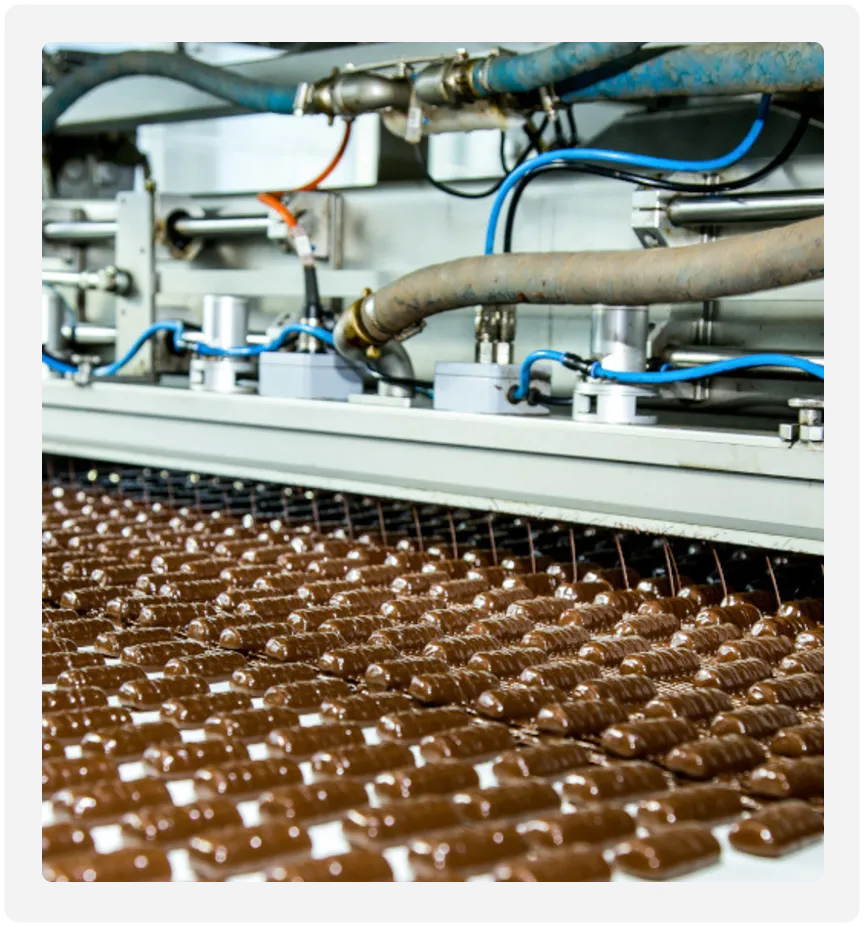
Bars (protein bars, snack bars, functional bars) tend to sit around 2,500 to 10,000 units. Bars can be deceptively complex because line setup takes time, and many manufacturers want longer runs to justify turning on bar equipment. If you want multiple flavours or multiple SKUs, the MOQ can multiply quickly.
Sauces, spreads and nut butters can range from 100kg to 500kg, depending on the process. Products requiring hot-fill, pasteurisation, or special handling can increase the minimum. Packaging is also a driver — jar suppliers and label minimums can push volumes up.
Gummies usually have some of the highest MOQs for founders. It’s common to see minimums in the range of 10,000 to 50,000 units. Gummies require long cook times, specialised equipment, complex stabilisation, and the smallest operational error can ruin an entire batch. Manufacturers often set higher minimums because the time investment is significant.
Ready-to-drink beverages and canned/bottled products often have high MOQs, typically 5,000 to 70,000 units depending on the manufacturer and packaging. Drinks are logistically heavy and expensive to run at small scale, especially once you factor in packaging, transport, and storage.
The “MOQ per SKU” problem (and why it kills founders)
One of the most common reasons founders get stuck is not the MOQ itself — it’s the way MOQ multiplies across SKUs.
A manufacturer might quote an MOQ of 2,500 units, and the founder thinks, “That’s manageable.” Then they add four flavours. Now the MOQ effectively becomes 10,000 units because each flavour is its own SKU and often requires separate batching, separate setups, separate packaging, and separate quality documentation.
The reality is that launching with too many flavours is one of the fastest ways to blow your budget, slow down manufacturing, and create unnecessary complexity.
The best approach for most new brands is to launch with one hero SKU and, if absolutely necessary, a second option. Build a story around your best product, move inventory faster, and add variations once you have demand and repeat buyers.
MOQ vs minimum batch size (they’re not always the same thing)
There’s a subtle but important distinction most founders miss: MOQ is not always the same as the true minimum batch size.
Minimum batch size is the technical minimum the equipment can safely and reliably run. MOQ is the commercial minimum the manufacturer sets so the job is worthwhile. A factory might be technically able to produce 50kg, but their MOQ is 200kg because labour, overhead and scheduling make anything smaller unprofitable.
If you understand this difference, it becomes easier to negotiate or find alternatives. Sometimes a manufacturer can run smaller than their MOQ if you accept compromises on packaging or scheduling. The “no” is often about economics, not feasibility.
What impacts MOQ the most (if you want to reduce it, focus here)
If your goal is to reduce MOQ, there’s no point trying to negotiate the number in isolation. You need to understand what’s driving it.
Packaging is almost always the biggest driver. Custom printed packaging creates hard minimums because suppliers won’t print 500 pouches for a new brand. They’ll print 10,000 or 20,000.
Product complexity matters too. The more ingredients and process steps involved, the more time and cost the run requires. Complex products also increase the risk of quality issues, which manufacturers reduce by enforcing larger runs.
Certain categories also require stricter quality systems and testing. If you’re creating a product with regulated claims, tight dosing requirements, or compliance obligations, the administrative load increases and MOQ usually rises.
How to reduce MOQ without ruining your unit cost (real strategies that work)
The best way to reduce MOQ is to reduce the manufacturer’s constraints, not to pressure them into doing something that doesn’t work operationally.
The fastest and most common strategy is using stock packaging instead of custom printed packaging. Rather than printing custom pouches, you can use plain stock pouches and apply labels. This single change can bring MOQ down dramatically because you’re no longer trapped by print minimums.
The second strategy is reducing SKUs. Fewer flavours and fewer variations mean fewer setups, fewer packaging components, and less downtime. Manufacturers love simple production plans, and they can often accommodate smaller runs when the job is operationally straightforward.
A third option is choosing a manufacturing partner that specifically supports small runs like YGF Manufacturing. Some manufacturers, like us, are built around startup-friendly volumes. You may pay a little more per unit, but you massively reduce inventory risk, and that trade is usually worth it early on.
For certain products, you can also request a pilot run or commercial trial run. Not every factory offers this, but it’s a strong option when the category has higher risk, or when you’re launching something new and unproven.
If you’re working with a product development team, reformulation can sometimes help too. If one “limiting ingredient” is forcing bulk purchasing, adjusting that ingredient, or sourcing it differently, can unlock a lower MOQ and reduce risk.
The trade-off most founders need to accept: MOQ vs cashflow
Low MOQ usually means higher unit cost. That’s just how manufacturing works. The fewer units you make, the more overhead each unit must carry.
High MOQ tends to mean better unit economics, but it comes with higher risk: more cash tied up, more storage required, and more inventory that could sit unsold.
Early stage brands often obsess over margins and forget the bigger goal: staying alive and learning fast. In the beginning, the best manufacturing decision is usually the one that supports a shorter cashflow cycle and lower risk, even if your unit cost is slightly higher.
Once you have demand, you scale MOQ and your margins improve naturally.
When a high MOQ is actually a good sign
It’s worth saying this clearly: a high MOQ doesn’t always mean the manufacturer is wrong for you.
Sometimes high MOQ simply indicates you’ve approached a manufacturer designed for scale. They’re efficient, automated, and cost-competitive when volume is high. They just aren’t structured for tiny launch batches.
If your product already has traction — strong pre-orders, wholesale demand, or high confidence in sales velocity — a higher MOQ can actually be the most profitable decision long-term. It depends entirely on your stage and your risk tolerance.
Want to know the MOQ for your product?
MOQ depends heavily on product type, packaging format, and the number of SKUs you want at launch.
If you tell us what you’re making and how you want it packed, we can give you a realistic MOQ estimate, expected unit cost ranges, and a practical launch pathway that doesn’t destroy your cashflow.
If you’d like help mapping this out properly, you can book a short feasibility call and we’ll walk through MOQs, costs, timelines, and the smartest next steps based on your category.


