
How Long Does It Take to Launch a Food Product From Scratch? (Realistic Timelines for 2026)
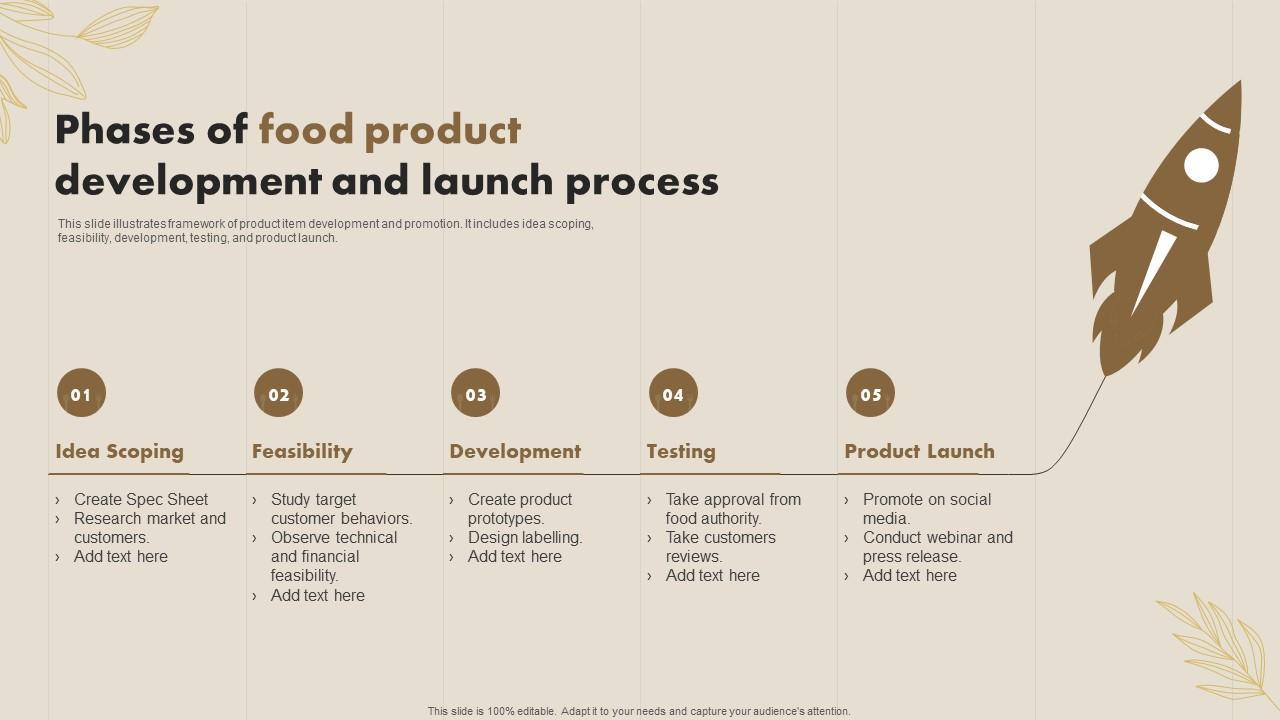
One of the first questions every founder asks is: how long is this going to take? The honest answer is that most food and supplement products take 6–10 months from concept to first production run on shelf — and that's with everything going reasonably smoothly.
This guide breaks down what actually happens at each stage, what drives timelines up or down, and how to structure your launch so you're not burning runway waiting for things you could have done in parallel.
Stage 1: Product Brief and Discovery (1–3 Weeks)
Before any formulation work begins, you need a clear product brief. This covers:
Product format (powder, bar, drink, gummy, capsule, etc.)
Target consumer and use case
Nutritional and functional goals (e.g., 25g protein per serve, low sugar, vegan)
Flavour direction
Target retail price and implied cost-of-goods target
Target market (AU, NZ, US, UK) — this affects compliance requirements from day one
Packaging preferences
A clear brief takes 1–3 weeks to develop properly. Founders who skip this step or provide a vague brief spend weeks in rework later when the formulation doesn't match what they actually wanted.
What slows this stage down: Indecision, too many stakeholders with conflicting opinions, or changing the brief after formulation has started (common and expensive).
Stage 2: Formulation Development (8–20 Weeks)
Formulation development is the longest and most variable stage. A food scientist translates your brief into a technically viable, commercially reproducible recipe — then refines it through sampling rounds until it meets your specifications.
What happens during formulation:
Initial formulation design and ingredient selection
Lab-scale sample production
Tasting and evaluation (usually 2–4 rounds)
Nutritional analysis
Allergen and compliance review
Specification sheet development
Timeline by product type:
Product CategoryTypical Formulation TimelineProtein powders / meal replacements8–12 weeksPre-workouts / sports nutrition powders8–14 weeksElectrolytes and hydration products6–10 weeksCapsules and tablets10–16 weeksGummies and soft chews12–20 weeksProtein bars and snacks12–18 weeksRTD drinks and liquid products14–20 weeksSkincare and topical products10–16 weeks
What drives timelines up:
Multiple flavour variants (each requires separate sampling)
Complex or unusual ingredient combinations
Slow client feedback on samples (the single biggest delay factor)
Compliance complications (novel ingredients, therapeutic claims)
Iterating on flavour beyond 2–3 rounds
What drives timelines down:
Simple formulation brief with clear parameters
Fast, decisive feedback on samples
Experienced formulation team with category knowledge
Commodity ingredients with no sourcing lead time
The most important thing founders can do to accelerate formulation is respond to sample feedback quickly and decisively. Every week of delay waiting for client approval is a week added to your launch timeline.
Stage 3: Manufacturing Trials and Scale-Up (3–8 Weeks)
Once your formulation is approved at lab scale, it needs to be validated on commercial manufacturing equipment. This is called a scale-up trial, manufacturing trial, or pilot run.
Scale-up trials exist because commercial equipment behaves differently from lab-scale equipment. Mixing dynamics, heat transfer, filling precision, and processing parameters all change at commercial scale. The trial identifies any processing problems before you commit to a full production run.
What happens during trials:
Transfer of specification and formulation to manufacturer
Trial production run (usually 1–2 batches)
Quality testing on trial output
Client review and sign-off
Adjustments if required (adds 1–2 weeks if significant changes are needed)
What slows this stage: Manufacturer scheduling (you're booking into their production calendar, which may have a 2–4 week lead time), failed trials requiring reformulation, or client sign-off delays.
Do not skip manufacturing trials. Founders who pressure manufacturers into going straight to a full production run to save time frequently end up with product that doesn't match their approved samples — and no easy remedy.
Stage 4: Packaging Development (4–6 Weeks — Runs in Parallel)
Packaging development should start in parallel with formulation — not after it. There are two components: pack format and label design.
Pack format (pouch, jar, box, bottle, sachet) can be selected and sourced while formulation is underway. You don't need a finalised formulation to choose your packaging format.
Label design can also begin during formulation, but cannot be finalised until the formulation is locked — because your nutritional information panel (NIP), ingredient list, and allergen declarations all depend on the final recipe.
Packaging timeline:
Pack format selection and supplier quoting: 1–2 weeks
Label design: 2–4 weeks (depending on design complexity and revision rounds)
Label compliance review: 1–2 weeks
Print production: 3–5 weeks
If you start packaging design 8 weeks into a 12-week formulation process, your packaging will likely be ready around the time your formulation is approved — rather than adding 8–10 weeks to your timeline.
What slows packaging down: Design revision cycles, compliance issues discovered late, or long print lead times from packaging suppliers.
Stage 5: First Production Run (4–8 Weeks)
Once manufacturing trials are approved and packaging is ready, your first production run is scheduled. At this point, the variables are the manufacturer's scheduling lead time and the complexity of your production process.
Typical production timelines:
Product CategoryProduction TimelinePowders (blending and filling)3–5 weeksBars and snacks4–6 weeksGummies5–8 weeksCapsules and tablets4–7 weeksLiquid products5–8 weeks
These timelines include production, quality testing, packaging, and dispatch to your warehouse. They assume you're working with a manufacturer who has capacity available — if you're booking into a busy manufacturing calendar, add 2–4 weeks for scheduling.
The Fastest We've Ever Done It: 29 Days
Our fastest launch — from initial brief to finished product on shelf — was 29 days. This was a powder-based product with a simple formulation brief, a client who turned around feedback within 24 hours at every stage, an existing manufacturer relationship with immediate capacity, and packaging that was procured and approved within the first two weeks.
It's an outlier, not a benchmark. But it illustrates what's possible when every decision is made quickly and nothing is done sequentially that can be done in parallel.
How to Structure Your Timeline to Launch Faster
Run workstreams in parallel. Packaging design, manufacturer selection, and regulatory research can all happen while formulation is underway. Don't wait for stage 1 to be complete before starting stage 2.
Make decisions fast. Sample feedback turnaround is the single biggest variable in formulation timelines. If you need two weeks to taste a sample and give feedback, your launch takes two weeks longer than if you do it in two days.
Don't change the brief mid-formulation. Brief changes after formulation has started reset the clock. Get alignment on your product vision before the food scientist starts work.
Choose the right product format for your timeline. If you need to launch in 4 months, a gummy or RTD drink is the wrong choice. A powder or capsule is more achievable.
Work with partners who have existing manufacturer relationships. Cold-starting a manufacturer relationship from scratch adds 4–8 weeks versus working through a consultancy with established partnerships.
Common Timeline Killers
Slow sample feedback: Every week of delay in client sign-off adds a week to the timeline
Changing the formulation brief after sampling has started
Not starting packaging design until formulation is complete
Compliance issues discovered at label review stage — fix these by reviewing compliance requirements at the brief stage, not at the end
Manufacturer capacity constraints — good manufacturers are often booked 4–8 weeks in advance
How YGF Can Help
YGF manages every stage of the product launch process — formulation, manufacturer selection, trials, compliance, and packaging — as an integrated workflow rather than a series of sequential handoffs. We run workstreams in parallel wherever possible, maintain established manufacturer relationships that compress scheduling lead times, and manage client approvals to keep momentum.
Our fastest launch was 29 days. Our average is significantly faster than the industry norm. If timeline matters to you, that's worth a conversation.


