
Drinks Manufacturing in Australia: Formats, MOQs & What Actually Takes Time
“I want to launch a drink” is one sentence that hides about six different decisions inside it. Ready-to-drink or powder? Bottle or can? Shelf-stable or refrigerated? Before you can even talk manufacturing timelines or costs, you need to pick a format, and that choice changes almost everything downstream.
Format Overview: RTD vs. Powder-to-Mix vs. Concentrate
Ready-to-drink (RTD) is exactly what it sounds like, bottled or canned, fully mixed, open and drink. It’s the format consumers find most convenient, and it’s also the most demanding to manufacture. RTD products need to be shelf-stable (or properly refrigerated and distributed cold), which means more rigorous formulation work around preservation, pH, and pasteurisation or aseptic filling.
Powder-to-mix shifts a lot of that complexity away. You’re manufacturing a dry blend that the consumer rehydrates themselves, which sidesteps most shelf-stability headaches since dry powders are naturally more stable than liquids. It’s also generally the fastest and most affordable format to bring to market, if the consumer experience of mixing your own drink fits your brand.
Concentrate sits somewhere in between, a liquid that gets diluted by the consumer or retailer. Lower shipping weight and volume than RTD, but still carries some of the liquid-handling and stability considerations that powders avoid entirely.
Why Drinks Carry Higher MOQs Than Powders or Bars
If you’ve read our other manufacturing guides, you’ll know powders can start from as little as 50 to 100kg and bars from around 5,000 units. Drinks, particularly RTD, usually sit meaningfully higher. Beverage lines are built for volume, bottling and canning equipment isn’t efficient at small batch sizes the way a powder blender is, and the packaging itself (bottles, cans, caps, labels) carries its own minimum order thresholds from suppliers.
What does this mean practically? If you’re testing a drink concept and capital is tight, powder-to-mix or concentrate formats let you validate demand at a lower financial commitment before you ever touch an RTD production line. Plenty of successful drink brands started as a powder and moved to RTD once they had real sales data behind them, not the other way around.
Shelf Stability and Compliance, the Part That Bites Founders Late
Here’s where drinks get genuinely tricky compared to solid formats. Liquid products are far more chemically active, ingredients interact, pH shifts, microbial risk is real, and shelf-life isn’t something you can just estimate from a home fridge test.
Compliance under FSANZ covers labelling and nutritional claims as it does for any food product, but drinks specifically need proper shelf-stability testing and, depending on your ingredients and process, may require pasteurisation or other preservation methods validated by your manufacturer. Skip this step, or rush it, and you risk a product that separates, discolours, or worse, isn’t actually safe by the time it reaches a consumer’s fridge three months after bottling.
Realistic Timelines, and Where Projects Slow Down
Drinks generally take longer than powders and sit comparable to, or sometimes beyond, bars, depending on complexity. Budget five to seven months for anything RTD, faster for powder-to-mix formats that skip a lot of the liquid stability testing.
Where do projects actually stall? Almost always at the stability testing phase. Founders get a great-tasting sample approved quickly, then discover during shelf-life testing that the formulation needs adjusting to hold up over months, not days. That adjustment round, redo the formulation, retest stability, can eat six to eight weeks that founders rarely budget for upfront.
Packaging is the other common snag, custom bottle moulds or can designs carry long lead times, sometimes longer than the liquid formulation itself. If you want a genuinely custom bottle shape rather than a stock option, start that conversation early. Very early.
Packaging: Bottles, Cans and the Decisions Hiding Inside Them
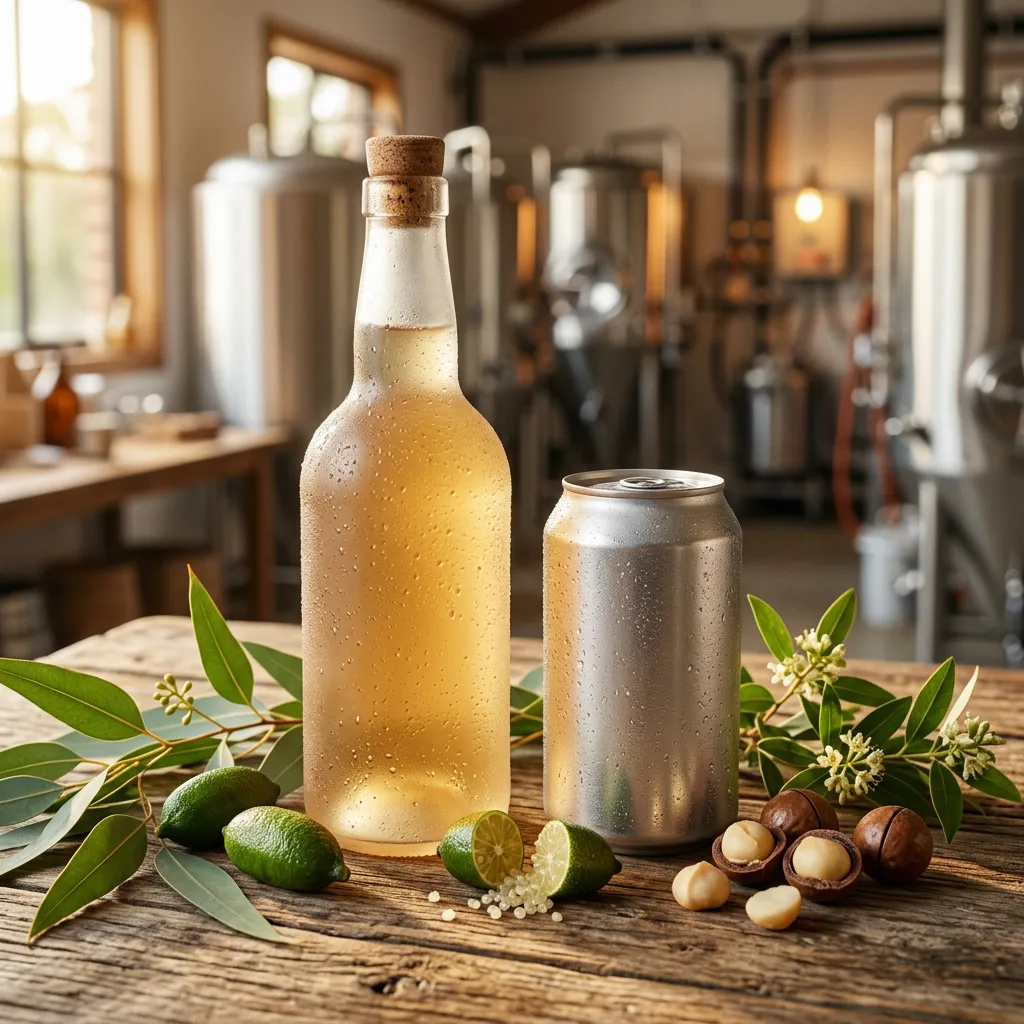
Glass or PET bottle? Aluminium can? Pouch? Each carries different cost structures, different sustainability credentials (increasingly something customers and retailers both ask about), and different production line requirements on the manufacturer’s end. Cans generally protect against light degradation better than clear bottles, which matters if your formulation includes light-sensitive actives or vitamins. Glass reads as premium but adds weight, cost, and breakage risk through freight and retail handling.
Closures matter more than founders expect too. A cap that doesn’t reseal properly, or a foil seal that’s inconsistent, turns into a customer complaint and a returns headache fast. None of this is exciting to think about early on, but it’s far cheaper to solve at the packaging brief stage than after your first pallet has shipped.
Carbonation, Cold Chain and Other Complications
If you’re considering a carbonated drink, add another layer of complexity on top of everything above. Carbonation affects packaging choice (not every bottle or can format handles pressure the same way), shelf-life behaviour, and filling equipment requirements. Not every manufacturer runs carbonated lines, which narrows your options and can push MOQs up further.
Cold chain is its own conversation entirely. If your product genuinely needs refrigeration rather than just benefiting from it, you’re now managing distribution logistics that shelf-stable products simply don’t deal with. This can be the right call for a genuinely premium, fresh positioning, but go in with eyes open about what it costs to maintain a cold supply chain from your manufacturer through to a retailer’s fridge.
Choosing the Right Format for Where You’re At
If you’re capital-constrained or want to validate demand fast, powder-to-mix is usually the smarter starting point, lower MOQ, faster timeline, simpler compliance pathway. If your brand identity depends entirely on the convenience of grab-and-go, RTD might be non-negotiable, just go in understanding the higher MOQ and longer runway it demands.
There’s also a hybrid path worth mentioning: launching powder-to-mix first to build a customer base and prove demand, then developing an RTD version later once you understand exactly how your customers actually use the product. It’s a slower route to a can on shelf, sure. But it’s also a far cheaper way to find out if people genuinely want what you’re building before you commit to the format with the highest MOQ and the longest lead time.
Not sure which format actually suits your product concept? That decision sits right at the start of the journey from idea to shelf, and it’s one worth getting right before any manufacturer conversations begin.
At YGF Manufacturing, our drinks team works across RTD, powder and concentrate formats, and part of our job is telling you honestly which format fits your budget and timeline, not just which one sounds best in a pitch deck. We also handle the shelf-stability testing and compliance work that trips up so many first-time beverage founders. Got questions about timelines for your specific drink idea? Our FAQs page has answers to the most common ones.
Ready to take the next step? Here is what you should do next: book a free discovery call and let’s map out which drink format actually fits your budget, timeline and brand.


