
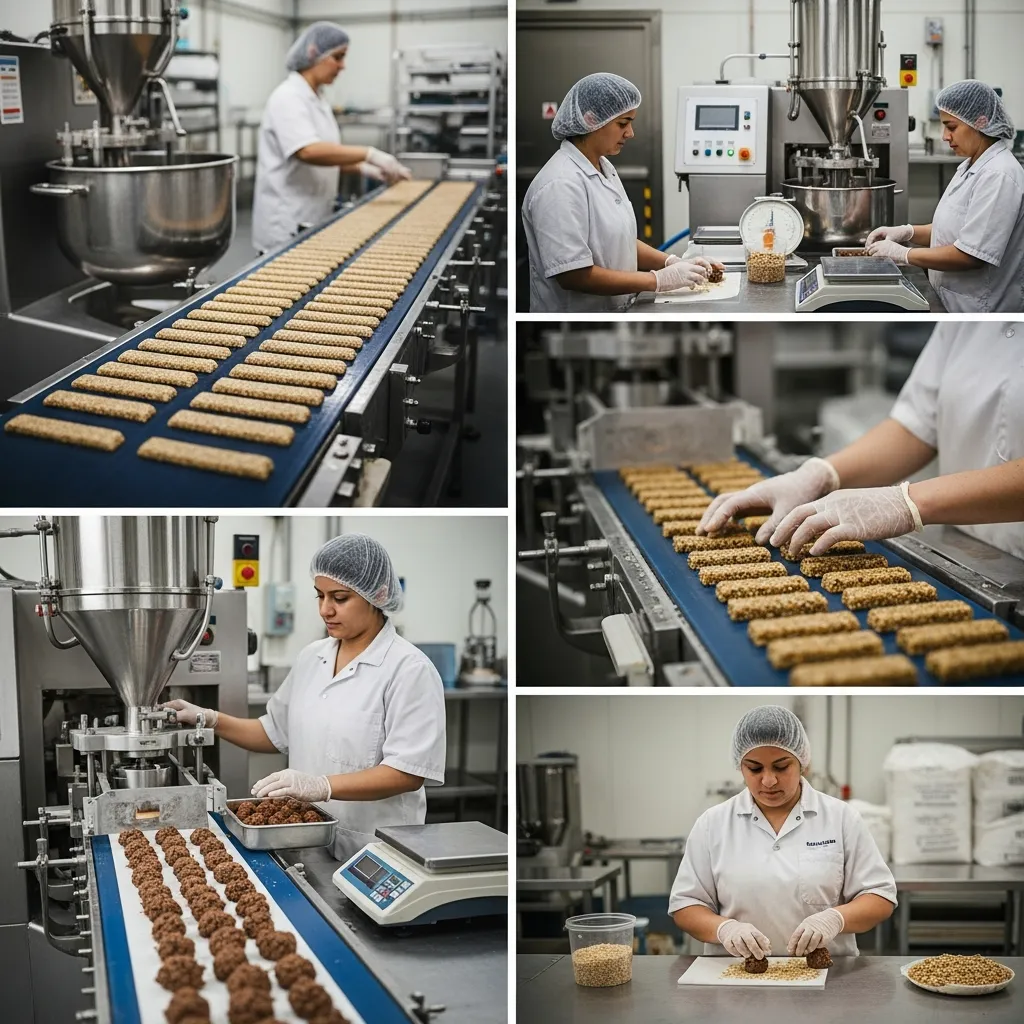
From Recipe to Shelf: How Protein Bars and Protein Balls Are Manufactured at Scale
One founder's protein balls were the hit of every yoga studio she handed samples to. Dates, almonds, a scoop of pea protein, rolled by hand at her kitchen table. She figured a manufacturer would just roll a bigger batch the same way.
They don't. Not even close.
Commercial bar and ball production is a different process entirely, built around machines, moisture control, and shelf-stability rules that a kitchen recipe was never designed to survive. If you're new to manufacturing altogether, our guide on how food manufacturing works from concept to production is worth reading alongside this one. Here's what actually happens between a home recipe and a shelf-ready product.
Two Categories, Two Very Different Processes
"Protein bars and balls" gets talked about as one category. It isn't.
Bars are typically made through one of two methods:
Cold-pressed / compression: ingredients are mixed, pressed into a slab, then cut. Common for raw, date-based, or no-bake style bars.
●Extrusion: ingredients are mixed and forced through a shaping die under pressure, producing a more uniform texture. Common for chewier, protein-dense bars.
Balls are usually produced through a rolling or forming line, where a mixed base is portioned and shaped mechanically rather than by hand. Getting a consistent size and weight across thousands of units is harder than it sounds. Hand-rolled balls vary naturally, and machine-rolled ones need to match a tight weight tolerance.
Neither process is "just scale up the kitchen version." Both require reformulating for machine behaviour, not just flavour.
Why Moisture Is the Real Enemy
This is the single biggest reason bars and balls fail after launch, not before.
A bar that tastes perfect on production day can go stale, hard, or mouldy within weeks if the moisture balance is wrong. Dates, nut butters, and syrups all bring different water activity levels into the mix. Get that balance wrong, and:
The bar dries out and turns tough within a month
Or the bar stays too moist and becomes a mould risk
Or the coating (if chocolate-dipped) sweats and loses its finish
Manufacturers test water activity as a standard part of formulation. It's not optional. It's the difference between a six-month shelf life and a six-week one.
Extrusion vs Enrobing: Know the Difference
If your bar has a coating (chocolate, yoghurt, a protein glaze) the coating process matters as much as the base recipe.
Enrobing runs the bar through a curtain of melted coating, giving full, even coverage. Common for premium-feel bars.
Dipping or drizzling is cheaper and faster but less consistent, and usually reserved for smaller runs or a rustic aesthetic.
Neither is "better." They're suited to different price points and different production volumes. A bar aiming for a premium retail shelf usually needs enrobing. A bar aiming for a fast, low-cost launch might not.
What MOQ Looks Like for This Category
Bars can often start from around 5,000 units with the right manufacturer. Balls, depending on the production line, can sometimes start lower.
That's higher than the entry point for powders, but still workable for a first commercial run if you're realistic about it. What pushes MOQ up fast is customisation: a unique shape, a specific coating, a niche allergen-free ingredient set. The more bespoke the request, the higher the minimum batch a factory needs to make it worthwhile.
Allergen and Ingredient Sourcing Headaches
Bars and balls sit right in the middle of some of the trickiest allergen territory in food manufacturing. Nuts. Dairy. Gluten. Soy. Often several at once.
A few things founders regularly underestimate:
Cross-contamination risk. A factory that also runs peanut-based lines may not be suitable for a "nut-free" claim, even if your recipe has no nuts.
Ingredient consistency. Dates and nut butters vary batch to batch in moisture content, which affects texture more than most founders expect.
Plant protein sourcing. Pea, rice, and hemp proteins behave differently under heat and pressure than whey, and not every factory has tuned processes for all three.
Sorting this out early, before formulation is finalised, avoids a very expensive reformulation later.
The Realistic Path From Kitchen to Shelf
Reformulate for scale, not just flavour. Water activity, shelf life, and machine compatibility all need testing.
Choose your production method based on texture goals: pressed, extruded, or rolled.
Decide on coating approach if applicable, based on your price point and volume.
Confirm allergen handling with your chosen manufacturer before committing.
Run a trial batch and test shelf life under real storage conditions, not fridge conditions.
Bars and balls typically take five to seven months from brief to first production run, similar timing to gummies, mostly because of the shelf-life testing required.
Getting It Right the First Time
The founders who struggle most with this category are the ones who treat the kitchen recipe as final and go looking for someone to "just make it bigger." The founders who succeed treat the kitchen recipe as a starting brief, and expect real reformulation work before commercial production.
Her protein balls launched seven months after that first yoga studio sample run. The recipe changed twice along the way, once for shelf stability, once because the machine-rolling process needed a slightly different fat ratio to hold shape. Same flavour her friends loved. Different formulation underneath.
If you've got a bar or ball recipe that people keep asking to buy, that's worth taking seriously, and worth getting the reformulation right before you commit to a manufacturer. YGF Manufacturing has helped 200+ founders navigate exactly this process, from kitchen recipe to FSANZ-compliant, shelf-stable production. Check out our protein bar and ball manufacturing services, or book a free discovery call and let's talk through what your product needs to make it to shelf.


