
Protein Bar Manufacturing: What Founders Get Wrong About Claims & Costs
Everyone wants a “high protein” bar these days. Walk down any supermarket aisle and the number on the front of the pack has basically become the whole marketing strategy. But here’s what nobody tells first-time founders: chasing a big protein number can quietly wreck your formulation, your cost, and your timeline if you don’t plan for it properly.
The High-Protein Claims Trend, and What’s Actually Driving It
Protein went mainstream a while back, but it’s accelerated hard recently. Gym culture, GLP-1 medications changing how people eat, general high-protein diet trends, all of it is pushing demand for bars that pack a genuine protein punch rather than the syrupy, sugar-heavy bars of a decade ago.
The catch? Consumers (and regulators) have gotten sharper. A bar claiming “20g protein” needs to actually deliver that, consistently, batch after batch. That’s not a marketing decision. That’s a formulation and manufacturing commitment.
What a Big Protein Number Does to Your Formulation, Cost and Texture
This is where things get technical fast, so bear with us.
Higher protein content changes texture. A lot. Protein-heavy bars tend toward dry, chalky, or overly dense unless the formulation accounts for it with the right binders, moisture content, and protein source blend (whey, pea, rice, soy, or a blend). Get the balance wrong and you end up with what the industry bluntly calls a bar that “tastes chalky at scale”, meaning it might taste fine in a hand-mixed sample but turns into cardboard once produced on commercial equipment.
Cost climbs too. Protein isolates and concentrates aren’t cheap, and the higher the protein percentage you’re chasing, the more of your ingredient budget goes toward the protein source itself, leaving less room for flavour, texture modifiers, or your margin. Founders often lock in a marketing number (“must say 20g protein on the front”) before checking what that number actually costs to hit at scale. Do the ingredient cost math before the design brief for your packaging, not after.
MOQs: Why Bars Need More Volume Than You’d Think
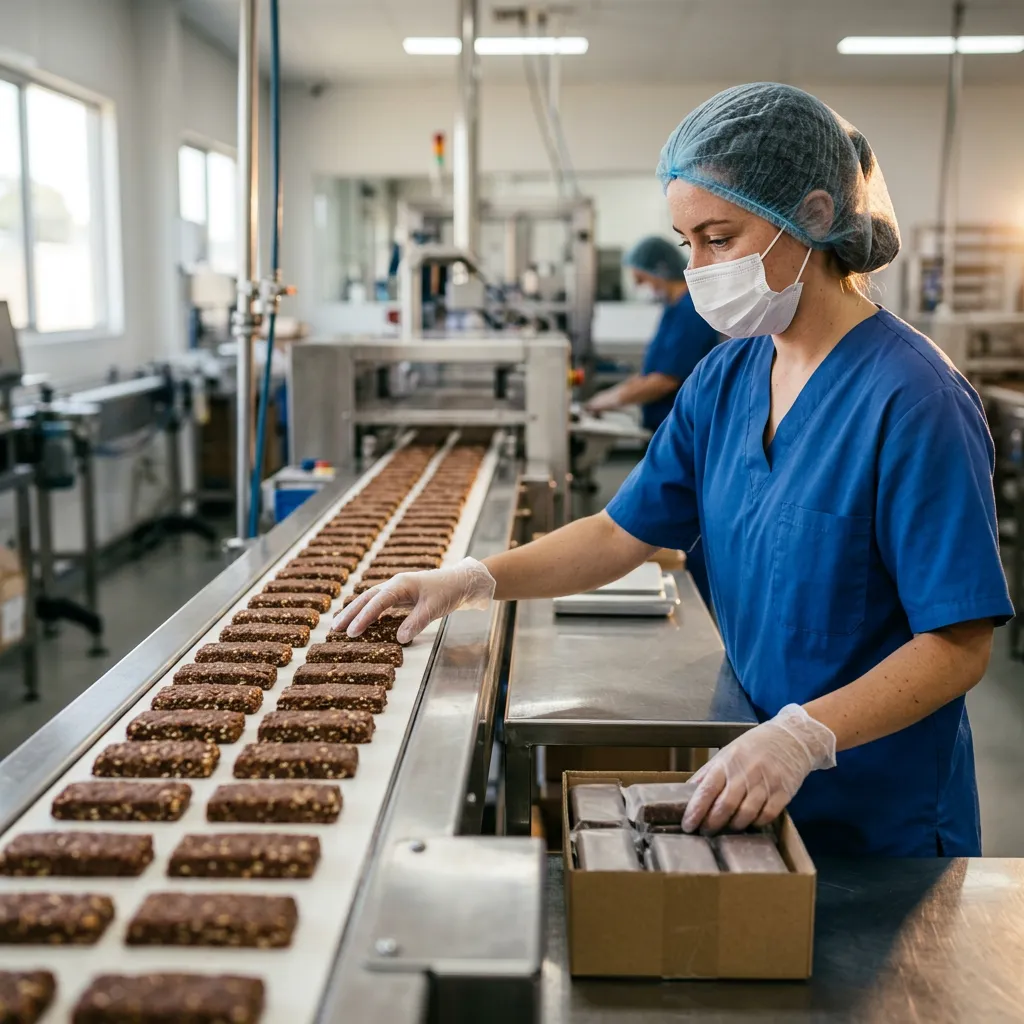
Minimum order quantities for protein bars in Australia typically start from around 5,000 units. That’s meaningfully higher than something like a dry powder blend, and there’s a reason for it: bar manufacturing lines are set up for continuous runs, extrusion, forming, cutting, coating (if applicable), and wrapping all happen in sequence, and the equipment isn’t efficient at very small batch sizes.
This matters for your budget planning. A 5,000-unit run of a premium, protein-dense bar with custom packaging is a real financial commitment before you’ve sold a single unit. Founders need to go in with eyes open about that number, not discover it three conversations into manufacturer outreach.
The Manufacturing Timeline, and Where Founders Lose Time
Bars generally sit in the five-to-seven month range from formulation to finished product, on the longer side compared to powders, shorter than some drink formats. Where does the time actually go?
Sampling rounds, mostly. Bars need multiple iterations to dial in taste, texture, and shelf stability simultaneously, and protein-forward bars need extra rounds specifically to solve the “chalky at scale” problem before it becomes a $30,000 production mistake. Founders who rush sampling to hit a launch date almost always regret it once the first commercial batch comes back different from what they approved.
Packaging adds its own runway too, printed wrappers or pouches typically need four to six weeks of lead time, running in parallel with production planning if you start early enough.
Avoiding the Chalky-at-Scale Trap
A few things separate bars that hold up at commercial volume from the ones that don’t.
Test at intended scale, not kitchen scale, as early as possible. A recipe that works in a 2kg test batch doesn’t always survive a 200kg commercial mix. The sooner you test closer to real production conditions, the fewer surprises later.
Don’t lock your protein number before your texture is right. It’s tempting to pick a headline number for marketing first. Better to nail the eating experience, then see what protein level that formulation genuinely supports, and adjust your claim to match reality rather than forcing reality to match your claim.
Budget for more sampling rounds than you think you need. Especially with a functional or high-protein claim on the front of the pack. This is not the place to cut corners to save two weeks.
Claims, Labelling and the FSANZ Reality Check
A protein number on the front of your pack isn’t just marketing copy, it’s a regulated claim. Under FSANZ, the protein content you state has to be substantiated and consistent across batches, tested, not eyeballed. This matters more than founders expect because ingredient variability is real. Different batches of a protein isolate can vary slightly in actual protein content, and your formulation needs enough of a buffer built in that you’re never technically under-delivering on what’s printed on the label.
There’s also a psychological trap here worth naming. Founders sometimes chase the highest possible number their competitors are using, without checking whether that number is even achievable in a bar that still tastes good. A genuinely excellent 15g-protein bar will outsell a chalky, unpleasant 25g-protein bar every time repeat purchases start mattering, and repeat purchases are where the real business lives, not the first sale.
Flavour Systems and Why Coating Isn’t Just Decoration
If you’re considering a chocolate or yoghurt coating, know that it adds its own layer of manufacturing complexity, and cost. Coatings need to be applied evenly, set properly, and survive shipping temperatures without blooming (that dull, greyish film that forms when chocolate temperature-cycles badly) or melting in transit during an Australian summer. Uncoated bars are simpler and cheaper to produce, but coating can meaningfully lift perceived quality and price point if you’re willing to solve the technical side of it properly.
Binder choice matters just as much as protein source. Dates, rice syrup, honey and various sugar alcohols all behave differently under heat, humidity and storage, and each interacts differently with a high protein load. This is exactly the kind of decision that’s much cheaper to get right in formulation than to fix after a production run has already happened.
Bars Are One Piece of a Bigger Decision
Protein bars are a strong format if your brand is built around performance, snacking, or a clear functional benefit. But they’re not automatically the right starting point for every founder, some ideas suit gummies or a powder format far better, especially if budget or timeline is tight. If you haven’t locked in your format yet, it’s worth reading how food manufacturing actually works from concept to production before committing.
It’s worth saying plainly: there’s no shame in launching at 12g or 15g protein instead of 20g if that’s what genuinely tastes good and hits your price point. A smaller, honest number that people actually enjoy eating beats a big number on a bar that sits half-eaten in someone’s gym bag.
At YGF Manufacturing, we work through this exact protein-versus-texture-versus-cost puzzle with founders constantly. We’ll tell you honestly if your target protein claim is realistic at your budget, before you’ve spent money finding out the hard way. Curious about typical costs and MOQs for your specific bar idea? Our FAQs cover the basics, but every formulation is different.
Ready to take the next step? Here is what you should do next: book a free discovery call and let’s figure out what protein number your bar can actually deliver, at a cost that still makes sense.


